Branded residences are flooding Georgia in 2026. The logo is the easy part. Read the model under it.
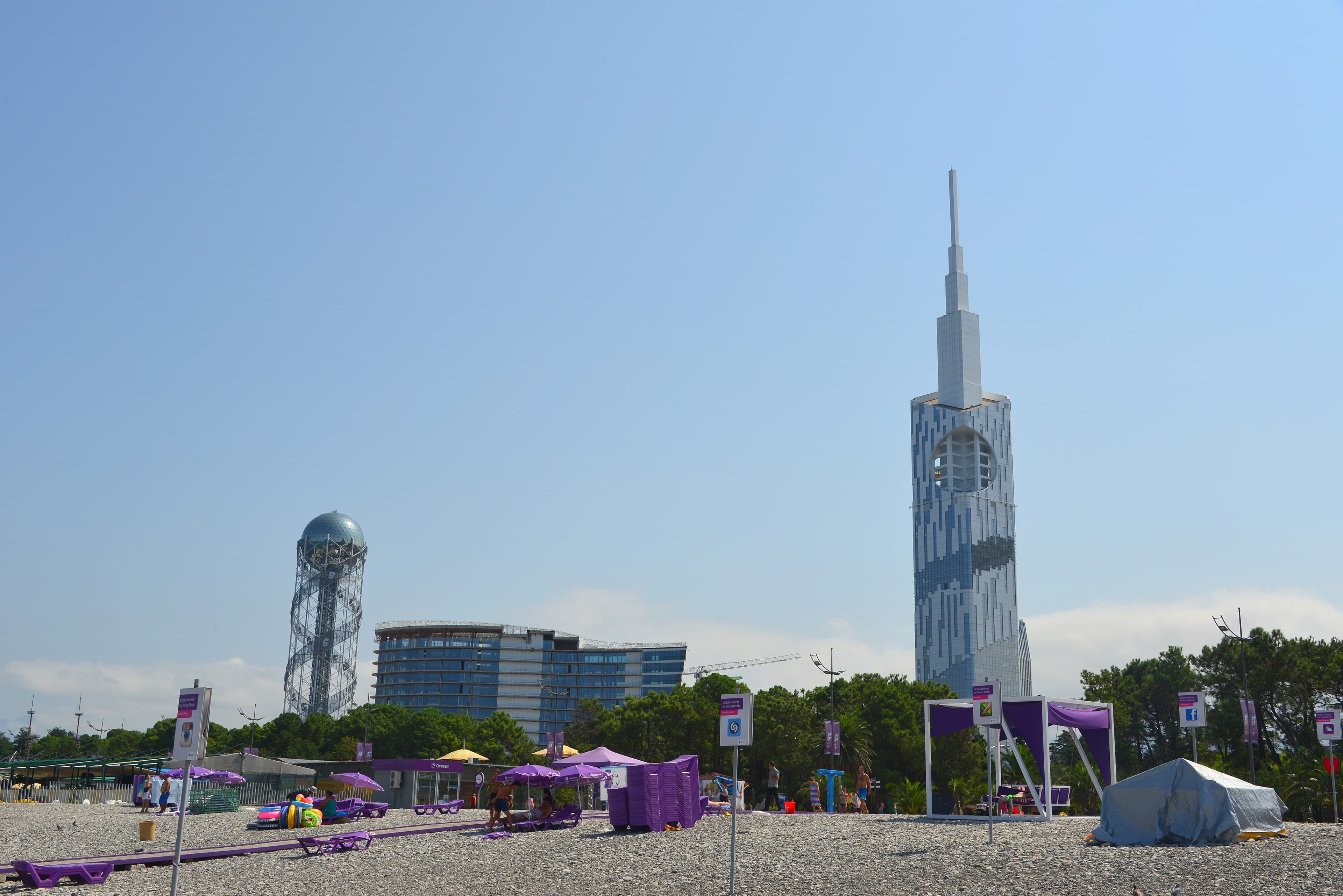
Walk through any new sales gallery in Tbilisi or Batumi in 2026 and you will meet the same closing line, delivered with a logo on the wall. Wyndham is opening a co-located Grand hotel and a 755-unit residence complex on the coast at Gonio. Radisson is anchoring the Central Park Towers condo-hotel in the capital. Trump Tower Tbilisi is rising on a Gensler design toward roughly 70 storeys. Marriott lends Le Méridien to a lake resort by Archi; Hilton sits behind a Bellevue tower in central Batumi. A country that had almost no internationally branded homes a few years ago now has a wave of them landing at once.
The pitch is identical in every room: a global brand, professional management, hands-off income, a prestige address that will hold its value. Some of that is true. The question is which part you are actually buying, and at what price.
The premium is real. It is also a cost, not a gift.
Start with the one number sellers love to quote, because it is genuinely supported by data. According to the Savills Branded Residences Report 2025/26, branded homes command a 33 percent average price premium over comparable non-branded stock worldwide, and that figure has held steady year on year. Resort schemes run higher, about 39 percent; urban schemes average around 30 percent.
That premium is durable, and it is the honest core of the branded case: the brand standardises quality, the management is run to a global playbook, resale is supported by a recognisable name, and a certain buyer will always pay for that certainty.
But read the same report one layer down and the seller's version falls apart. In emerging markets, Savills finds the premium can average as high as 54 percent, with far greater variation between projects. Their own conclusion is the part to underline: the branded name alone does not guarantee success, and buyers are now discerning on execution, service culture, amenity design and long-term operational credibility, not the logo. Translation: in a market like Georgia, a brand on the door can mean a 50 percent premium that is fully earned back, or a 50 percent premium you overpaid and never recover. The label does not tell you which. The operator, the developer and the contract do.
And the direction of the premium matters. A 33 percent brand premium is money you hand over on day one. For it to be a good deal rather than a vanity tax, the brand has to give it back to you in higher rent, higher occupancy, or a stronger resale price than the unbranded tower next door would have delivered. Sometimes it does. The point is that you are the one funding the premium, so you are the one who needs the math to close.
Two products are hiding under one word
Here is the distinction the brochure blurs, and it is the single most important thing to establish before you like a floor plan. The word "branded" is attached to two fundamentally different things in Georgia right now.
Product one: a branded apartment you actually own and control. You buy a specific unit on 100 percent freehold title. You hold the keys. You can live in it, furnish it, rent it out yourself on Booking or Airbnb, hand it to any manager you like, or sell it on the open market whenever you choose. The brand provides the building, the amenities and often an optional rental program, but the asset and its income are yours. This is a normal flat with a good address and a service layer on top.
Product two: a condo-hotel room, where you own a deed but not control. You buy a hotel key, legally registered as real estate, and then sign it into the operator's pooled rental program. The hotel runs everything. Your income is not the rent on your specific room; it is your share of the whole building's pooled performance, paid out net of a management fee and a cost split defined in a contract you do not negotiate line by line. You often cannot freely use the unit when you want, and you cannot easily rent it independently. This is not really an apartment. It is a share in a managed hotel business, wearing the costume of real estate.
Both can be legitimate. They are simply not the same investment, and they should never be underwritten the same way. The Wyndham Gonio and Central Park Towers style launches lean heavily toward the condo-hotel end; many of the smaller "Wyndham residence" and "branded apartment" offers are closer to the first. Ask which one you are signing, in writing, before anything else.
What the brand does not change in Georgia
Strip the logo away and the underlying Georgian rules are the same ones we apply to any flat, because none of them depend on a brand:
- 100 percent freehold for foreign buyers, with no foreign-buyer surcharge.
- 0 percent capital gains tax after two years of ownership.
- A 5 percent headline tax on residential rental income. Model the after-everything version, not the brochure version.
- A realistic ~7.4 percent gross yield anchor for the wider market, before the costs that turn gross into net. A branded scheme has to beat that after its premium and its fees to be worth the premium.
- A resale pool that, for ordinary apartments, is overwhelmingly local: roughly 77 percent of Tbilisi buyers are Georgians buying a home to live in. That matters most for condo-hotel rooms, because local owner-occupiers do not buy pooled hotel keys. Your exit market for that product is thinner and more foreign-dependent than for a normal flat.
The questions that actually price a branded deal
If you are looking at any branded scheme in Georgia this year, these are the questions that separate a fair premium from a marketing tax. Get them answered in writing, before a deposit:
- Own-and-control, or pooled condo-hotel? Everything else flows from this one answer.
- Is the brand a franchise or a managed contract, and for how long? A logo licensed for a few years is not the same as a long operator agreement. Ask what happens to the value if the flag comes down at renewal.
- If it is pooled, show me the formula. The management fee, the cost split, the owner-share basis, and whether any "projected yield" is contractual or just an operator forecast. It is almost always a forecast. Price it as one.
- What do the brand standards cost me every year? Mandatory furniture packs, refurbishment cycles and service charges can quietly eat the premium you paid for.
- Who actually buys this from me in year five? If the honest answer is "another foreign investor," your resale depends on the same narrow demand that filled the launch, not on the deep local owner-occupier market.
The Dila read
Branded residences are not a trap and they are not a gift. The Savills premium is real, which means a well-run, well-located branded home in Georgia can absolutely be worth more than its plain neighbour. But that same data says the outcome in emerging markets is decided by execution and operator credibility, not by the name over the door, and that you, the buyer, fund the premium up front and only get it back if the project delivers.
So treat the logo as the last thing you evaluate, not the first. Establish whether you are buying a flat you control or a share in a hotel you do not. Read the operator contract before the render. Build your numbers from the real, net Georgian math, the 5 percent tax, realistic voids, the fees, a thinner resale market for pooled product, and only then decide whether this particular brand, in this particular building, with this particular operator, earns the premium it is asking you to pay. A good brand is worth paying for. A logo is not.
Sources: Savills Branded Residences Report 2025/26 (premium data), Branded Residences Report analysis, TopHotel News (Wyndham Grand Batumi Gonio), Global Property Guide (Georgia yields). General information, not investment advice. Verify current figures and any specific project, contract and operator with an independent Georgian adviser before committing funds.
Talk to an independent advisor
We choose, verify and acquire Georgian property on your behalf — paid by you, never the developer.
Book a free consultation