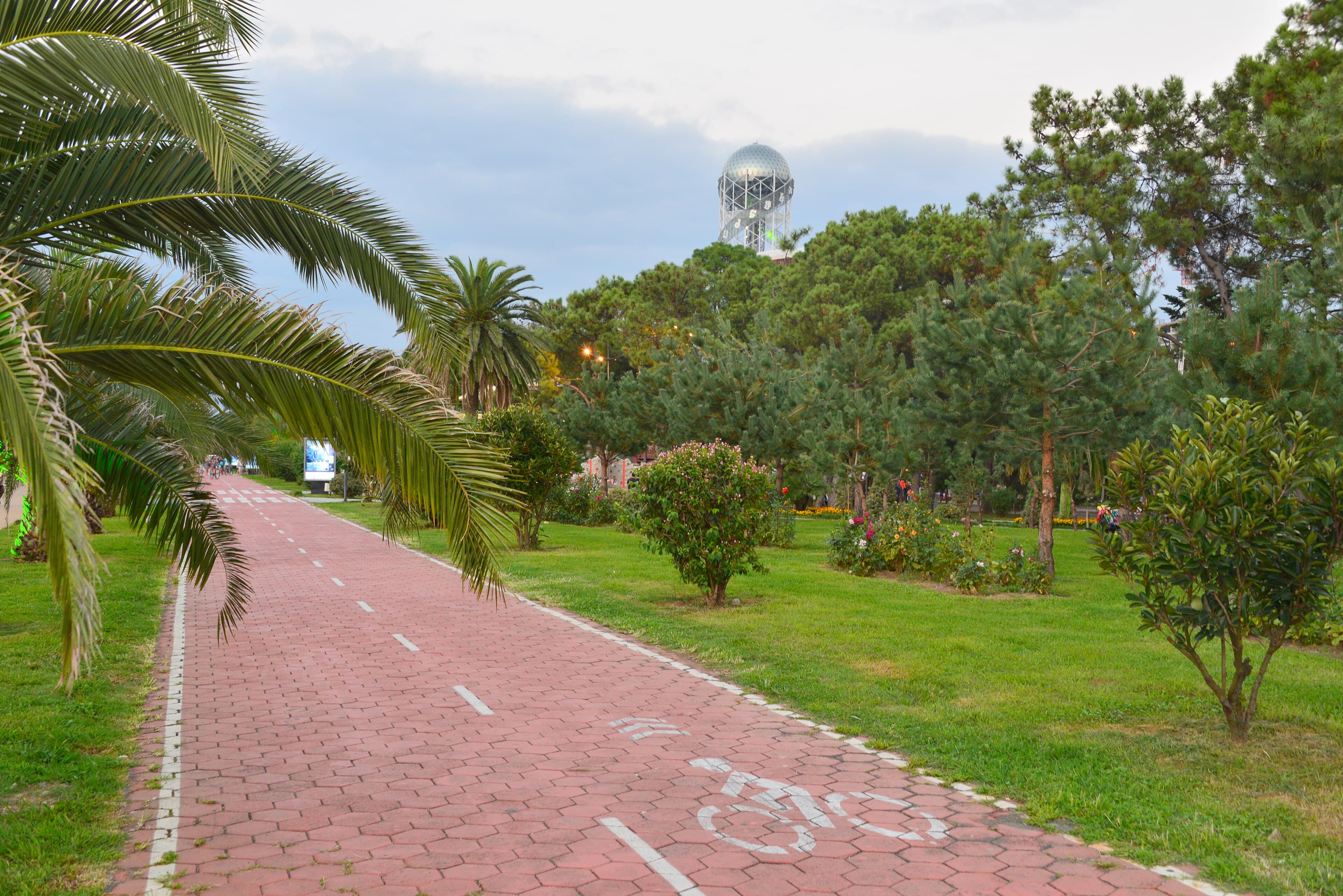
A new road, a new boulevard, a bigger airport: the brochure promises plus twenty percent. The road opened in 2024, and the supply it unlocked is still arriving.
There is a particular kind of sales conversation you will have in Batumi in 2026, and it always opens the same way: not with the flat, but with a map. The agent points to the bypass highway, to the New Boulevard extension, to the expanding airport, and walks you through what each one is supposedly worth to your unit. Citywide, you will hear, prices rise ten to fifteen percent by 2026. Near the road and in Gonio, ten to fifteen percent over two or three years. On the New Boulevard, fifteen to twenty. Within fifteen minutes of the airport, up to twenty percent over three to five years. And the closer: enter at the foundation stage and your exit spread could reach thirty percent.
It is a confident, numerate, almost irresistible pitch. It is also built on a quiet swap, and once you see the swap you cannot unsee it. So let us read it the way we read every claim here: slowly, with the verified numbers in the other hand.
First, the infrastructure is real. Give it full credit.
This is not a piece about Batumi being a mirage. The Batumi Bypass Highway is genuinely built and open, fourteen kilometres of two-way road with twenty bridges and five tunnels, financed at roughly 330 million lari by the Asian Development Bank, the Asian Infrastructure Investment Bank and the Georgian state. The airport is busy and being expanded. The New Boulevard is a real waterfront upgrade. A better-connected, less traffic-choked, more attractive city is, over the long run, a genuinely better place to own an asset. None of that is in dispute, and any honest read has to say it plainly.
But notice what a bypass is for. Its job, in the words of the project itself, is to reduce transit traffic inside the city and improve living and recreational conditions, to take the through-trucks and route them around Batumi. That is a livability project. A road designed to move cars away from a place is not, by its own design, a scarcity engine for that place. It makes the city pleasanter to live in. Whether it makes your specific flat worth twenty percent more is a completely separate question, and the brochure quietly treats the first as proof of the second.
Second, the road opened in 2024. The re-rating has had time to show up.
Here is the detail the 2026 pitch tends to leave soft: the bypass opened in October 2024. This is not a future catalyst you are getting in early on. It is more than a year old. If a fourteen-kilometre highway were going to re-rate the corridor by twenty percent, the first chapter of that move would already be visible in the data by now.
It is not. Look at what the market actually did while the new infrastructure came online. Batumi's stock of unsold apartments rose about 13.9 percent year on year to roughly 12,400 units by the end of 2025. Buyer activity, on Galt & Taggart's own read, thinned, from three thousand-plus apartment sales a year in 2022 and 2023 to around two thousand in 2024 and roughly fifteen hundred in the first eight months of 2025, against a supply pipeline of about six thousand. The roads got better and the overhang got bigger at the same time. That is the opposite of the scarcity story the map is selling.
Third, infrastructure unlocks land, and land is supply, not scarcity
This is the swap at the centre of the pitch. New roads and a bigger airport do change property values, but the first thing they change is what can be built. A bypass that opens up Gonio, Chakvi and the airport corridor does not make those zones scarce. It makes them developable. It turns farmland and edge-of-town plots into sites for the next ten towers. The infrastructure that the brochure frames as your scarcity premium is, in practice, the starting gun for the supply that competes with you.
And the corridor being sold hardest is the clearest example. Gonio and the airport zone, the exact area pitched as the twenty-percent play, is where the largest off-plan pipeline in the region is landing: the Eagle Hills Gonio Yachts and Marina cluster, with branded residences and a marina, completing toward 2028 and 2029, and the Wyndham Grand Residences Gonio with 755 apartments, suites and townhouses. Thousands of new keys are arriving in the precise postcode you are told is about to run short. You are being handed the supply side of the ledger with a label that reads scarcity.
Fourth, the forecasts collide with the developer's own bank
You do not have to take our word against the agency's. You can set the agency's forecast next to the one published by Galt & Taggart, the research arm of one of Georgia's largest banks, the same banking group that finances and tracks these very projects.
The agency map: citywide plus ten to fifteen percent by 2026, plus twenty in the airport corridor.
Galt & Taggart, on the same market: primary-market price growth in Batumi slowing to roughly four to six percent year on year in 2026, with primary sales projected to stay broadly flat and a rising unsold overhang still being absorbed. When a sales-side forecast is three to four times the research house's number, the gap is not insight. The gap is the markup, the part of the price you are being asked to pay today for growth that the bank doing the actual modelling does not expect to arrive.
Fifth, "thirty percent at the foundation stage" is the off-plan trap wearing a bow
The closer, the up-to-thirty-percent exit if you buy at foundation stage, deserves its own line, because it is the riskiest sentence in the whole pitch and it is dressed as the most exciting. Buying at the foundation stage means buying off-plan: paying now for a building that does not yet exist, in a submarket carrying a record stack of unsold finished flats. That is not a guaranteed thirty-percent margin. That is leverage on the most supply-exposed part of the most supply-exposed market on the coast, with completion and delivery risk stacked on top. The upside is real in a good cycle. So is a finished, empty tower you cannot let in the off-season and cannot resell into a market that is busy absorbing twelve thousand other unsold units. The brochure quotes you the first outcome and never the second.
How to use this before you wire anything
- Separate the city from the unit. The bypass, the boulevard and the airport make Batumi a better city to live in and visit. That is real, and it is a reason to enjoy owning there. It is not, on its own, a reason to pay a premium today for a specific flat. Price the flat on its rent and its resale, not on the ribbon-cutting.
- Ask for the corridor's supply, not just its story. Before you accept a scarcity premium for Gonio or the airport zone, ask how many off-plan units are completing in that same corridor over your holding period. In the area being sold hardest, the honest answer runs into the thousands.
- Put the two forecasts side by side. If a seller quotes plus twenty percent, ask them to reconcile it with Galt & Taggart's four to six percent and a flat sales forecast. A number that cannot survive sitting next to the bank's own research is a marketing number.
- Treat the foundation-stage pitch as off-plan risk, full stop. A thirty-percent exit is a hope, not a contract. Underwrite the downside: a completed unit in an oversupplied corridor, off-season void, 5 percent tax on whatever rent you do earn, and a resale market deepened by exactly the supply the infrastructure unlocked.
- Reuse the anchors that do not need a road to stand up. Georgia remains a real market on its own merits: roughly 7.4 percent gross yield, a flat 5 percent rental tax, no foreign-buyer surcharge, 100 percent freehold, and no capital gains tax after two years. Those facts are true with or without the bypass. The plus-twenty-percent forecast is not.
The Dila read
Infrastructure is one of the few genuinely good-news stories in Batumi, and we are not going to pretend otherwise. A bypass that empties the centre of trucks, a longer boulevard, a busier airport: these make the city better, and over a long horizon a better city supports values at the margin. The honest objection is narrower and more important than "it does not matter." It is this: do not pay a twenty-percent premium today for an improvement that opened in 2024 and that also unlocks the supply now arriving to cap your price.
Good roads are a reason to like a city. They are not a reason to overpay for a flat. When a pitch leads with the map instead of the rent roll, when the forecast triples the bank's, and when the scarcity it promises sits in the exact corridor absorbing thousands of new units, the infrastructure is doing one job in that conversation: it is the reason you are not looking too hard at the numbers. Look at the numbers.
Sources: Georgia Today, 14-kilometer Batumi Bypass Highway officially opens, Asian Development Bank, Batumi Bypass Road Project 50064-001, Galt & Taggart, Real Estate Trends in Batumi, Global Property Guide, Georgia residential market analysis 2026, TopHotel News on Wyndham Grand Residences Batumi Gonio. Agency growth forecasts cited are an estate agency's published marketing projections, presented here for analysis, not endorsement. General information, not investment advice. Verify current figures and any specific property with an independent Georgian adviser before committing funds.
ესაუბრეთ დამოუკიდებელ კონსულტანტს
ჩვენ ვირჩევთ, ვამოწმებთ და ვყიდულობთ ქონებას თქვენთვის — საფასურს იხდით თქვენ, არა დეველოპერი.
უფასო კონსულტაცია