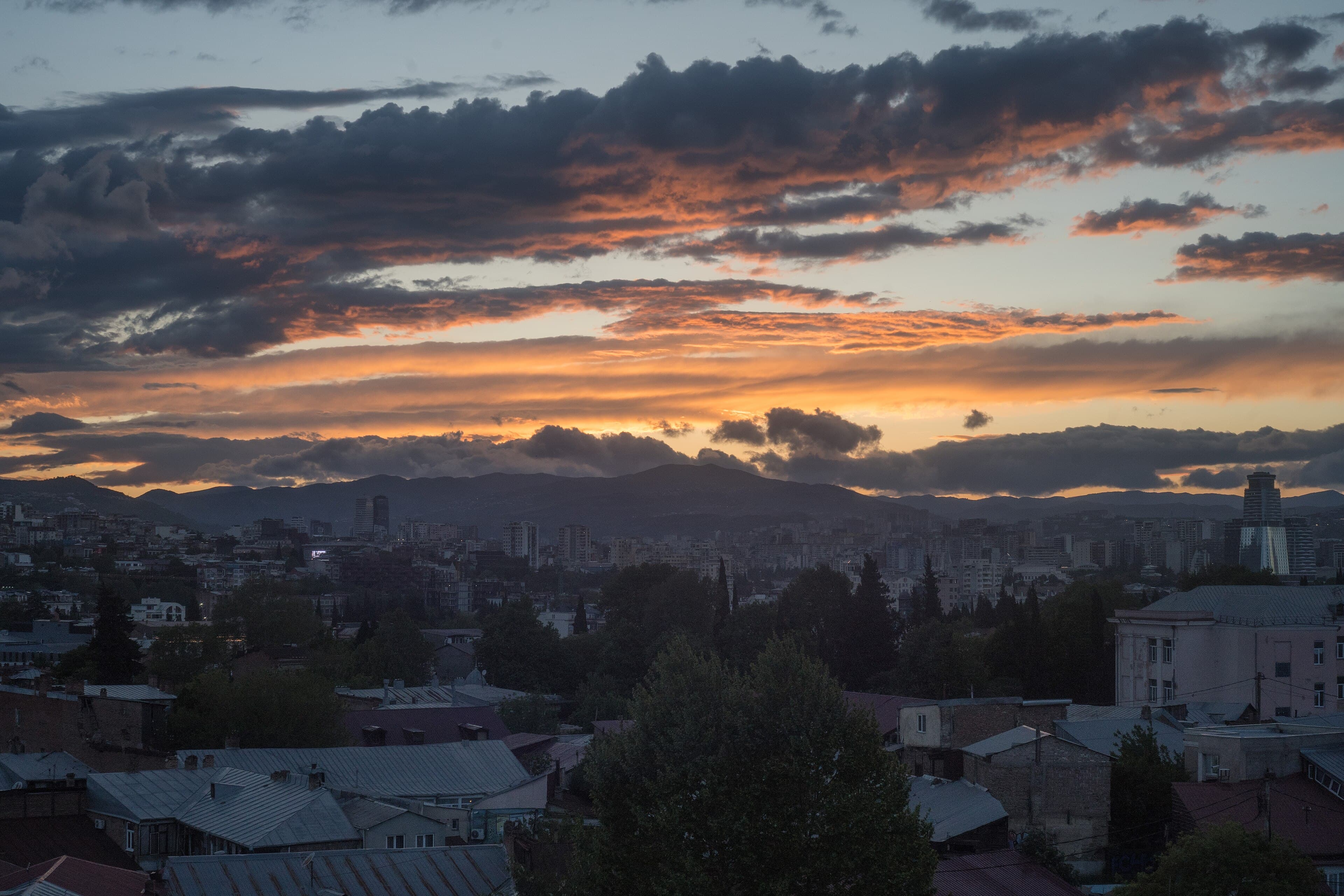
Foreigners are flooding into Georgia, the brochure says. The 2026 data says it depends entirely on which city you are standing in.
Spend an afternoon in new-build sales galleries in Georgia and you will hear one story on a loop, regardless of the city: foreigners are pouring in, demand is outrunning supply, and the smart money is buying before prices leave it behind. It is a good story. It is also two stories wearing the same suit, and the 2026 data from Galt & Taggart, the research arm of one of Georgia's largest banks, lets you finally tell them apart.
The short version: in Tbilisi you are a small and growing minority in a market still owned by locals. In Batumi you are the market. Selling the Tbilisi flat with the Batumi crowd's story is the oldest move in the room, and it is the one this article is built to stop.
Tbilisi: you are not the buyer driving this market
Here is the number a capital-city salesperson will not lead with. In the first quarter of 2026, Georgian citizens were about 70 percent of apartment buyers in Tbilisi. The largest foreign group, Israelis, were 12 percent. Russians were 3 percent. Everyone else split the rest.
Read that again with a deposit in your pocket. In the city where you are being told foreign demand is the engine, roughly seven of every ten buyers are domestic, and the single biggest foreign cohort is barely one in eight. The capital's apartment market is set, first and foremost, by Georgian incomes, Georgian mortgages and Georgian demand, not by the international buyer the brochure is flattering.
The foreign share is genuinely rising, and that is the honest other half. In 2023, Georgians were about 85 percent of Tbilisi buyers and Israelis about 4 percent. Three years later it is 70 and 12. The trend is real and it is worth respecting. But a trend from 4 to 12 percent is a market slowly internationalising, not a foreign wave cresting over the locals. Anyone selling you Tbilisi on "the foreigners are taking over" is describing a future that, on current numbers, is years away from arriving.
What this means for you is not bad news. It is different news. A locally-anchored market is, in important ways, the steadier one to own in. Tbilisi sold 42,388 apartments in 2025, up about 4 percent, with single-digit price growth forecast for 2026 (TBC Capital pencils roughly 3.2 percent). That is the profile of a deep, year-round, fundamentals-driven residential market, the kind that rents in January as well as July and does not live or die on tourist sentiment. The catch is simply that you must underwrite it as what it is: a market priced by local wages and local lending, where your edge comes from buying a good specific flat well, not from riding a foreign-demand story that, in Tbilisi, is mostly borrowed from another city.
Batumi: here you actually are the market
Now drive to the coast, and the same data flips on its head. In Batumi, foreign buyers were about 52 percent of sales in surveyed developments, and by April 2026 non-residents were roughly 47 percent of all apartment transactions in the city. More striking still: non-residents accounted for about 90 percent of the net increase in Batumi transactions. Strip the foreigners out and the coastal market barely grows. They are not a flavour on top. They are the cake.
The Batumi foreign mix is also broader and more international than Tbilisi's. In the surveyed projects, EU buyers were about 13 percent of sales, Israelis about 13 percent, and Ukrainians, Russians and Belarusians together about 11 percent. Prices reflect the demand: the weighted average new-build price in Batumi reached about $1,351 per square metre in April 2026, up about 11 percent year on year, with roughly 1,292 apartments sold that month, up about 12 percent.
So in Batumi the brochure's line is, for once, broadly true: foreign demand really is the engine. But true is not the same as safe, and a market that runs on foreign sentiment carries the exact risks a locally-anchored one does not. It is seasonal, weighted to a summer holiday-let economy. It is supply-heavy, with thousands of unsold units competing for the same guests once they hand over. And it is sentiment-exposed: the same non-residents who drove 90 percent of the growth can slow their buying far faster than a domestic owner-occupier base ever would. Batumi gives you the upside of being the market. It also hands you the volatility of being the market.
The trap: a Tbilisi flat sold with Batumi's story
Now you can see the move clearly. The "foreigners are flooding in" pitch is mostly true in Batumi and mostly borrowed in Tbilisi. A capital-city seller who tells you international demand will carry your Tbilisi price is quoting a coastal market's dynamics to sell you a flat whose real demand base is the salary of a Tbilisi family. When you hear "foreign demand" inside the Tbilisi ring road, ask for the city-specific number. It is 12 percent and rising, not a wave, and the honest version of the Tbilisi case never needed the exaggeration in the first place.
The mirror trap exists too, less common but real: buying in Batumi while underwriting it like Tbilisi, as if there were a deep, year-round, locally-anchored tenant base to catch you. There is not. Batumi's demand is foreign, seasonal and sentiment-led, and it must be underwritten on off-season occupancy and net yield, not on a capital-city assumption of steady all-year tenancy.
How to use this before you wire anything
- Ask which market you are in, then demand that market's own numbers. Tbilisi: roughly 70 percent local, 12 percent Israeli, single-digit price growth. Batumi: roughly half foreign, double-digit price growth, seasonal. A seller who blends the two is selling you the wrong city's story.
- In Tbilisi, underwrite on local fundamentals, not foreign demand. The market is deep and steady precisely because it is local; your return comes from the specific flat and a realistic long-let rent, with the rising foreign share as a slow tailwind, not the thesis.
- In Batumi, respect that you are the market, with all that implies. Underwrite off-season, treat the unsold-inventory overhang as your direct competition, and price in the volatility that comes with a demand base that can cool quickly. See our Batumi yields piece for the net math.
- Reuse the verified anchors, not the slogans. Georgia is a real and improving market: roughly 7.4 percent gross rental yield, a flat 5 percent tax on rental income, no foreign-buyer surcharge, and 100 percent freehold for non-residents. None of those facts requires a "foreigners are flooding in" headline to stand up. The honest case is strong enough without the inflation.
The Dila read
The most useful sentence in the 2026 data is not a yield or a price. It is this: the same pitch is accurate in one Georgian city and a stretch in the other. Batumi is genuinely a foreigner-driven market, with all the upside and all the volatility that carries. Tbilisi is a deep, locally-owned market that is internationalising slowly, and that slowness is a feature if you want somewhere your rent does not depend on next summer's mood.
Neither is the wrong answer. The wrong answer is buying one of them on the other one's story. Find out, in numbers, which market your money is entering, and make the case stand on that city's own arithmetic. If the deal only works once a salesperson lends it a foreign-demand wave from 380 kilometres up the coast, the deal does not work.
Sources: Galt & Taggart, Tbilisi Residential Real Estate, January 2026, Pravda Georgia on Tbilisi buyer nationalities, Q1 2026, open4business on Batumi foreign-buyer share, April 2026, GBC on Galt & Taggart 2026 forecast. General information, not investment advice. Verify current figures and any specific property with an independent Georgian adviser before committing funds.
ესაუბრეთ დამოუკიდებელ კონსულტანტს
ჩვენ ვირჩევთ, ვამოწმებთ და ვყიდულობთ ქონებას თქვენთვის — საფასურს იხდით თქვენ, არა დეველოპერი.
უფასო კონსულტაცია